
Phoenix Solar Company for Home Solar Panels
Verix Energy is a solar company in Phoenix, AZ. Phoenix is large enough that one utility does not cover it. Arizona Public Service serves large parts of the north and west. Salt River Project serves other parts of the city, including areas of central and south Phoenix. The City of Phoenix tells electrical designers to identify the serving utility as APS or SRP. The address decides. We are based in Gilbert and handle design and sales. Licensed contractors install.
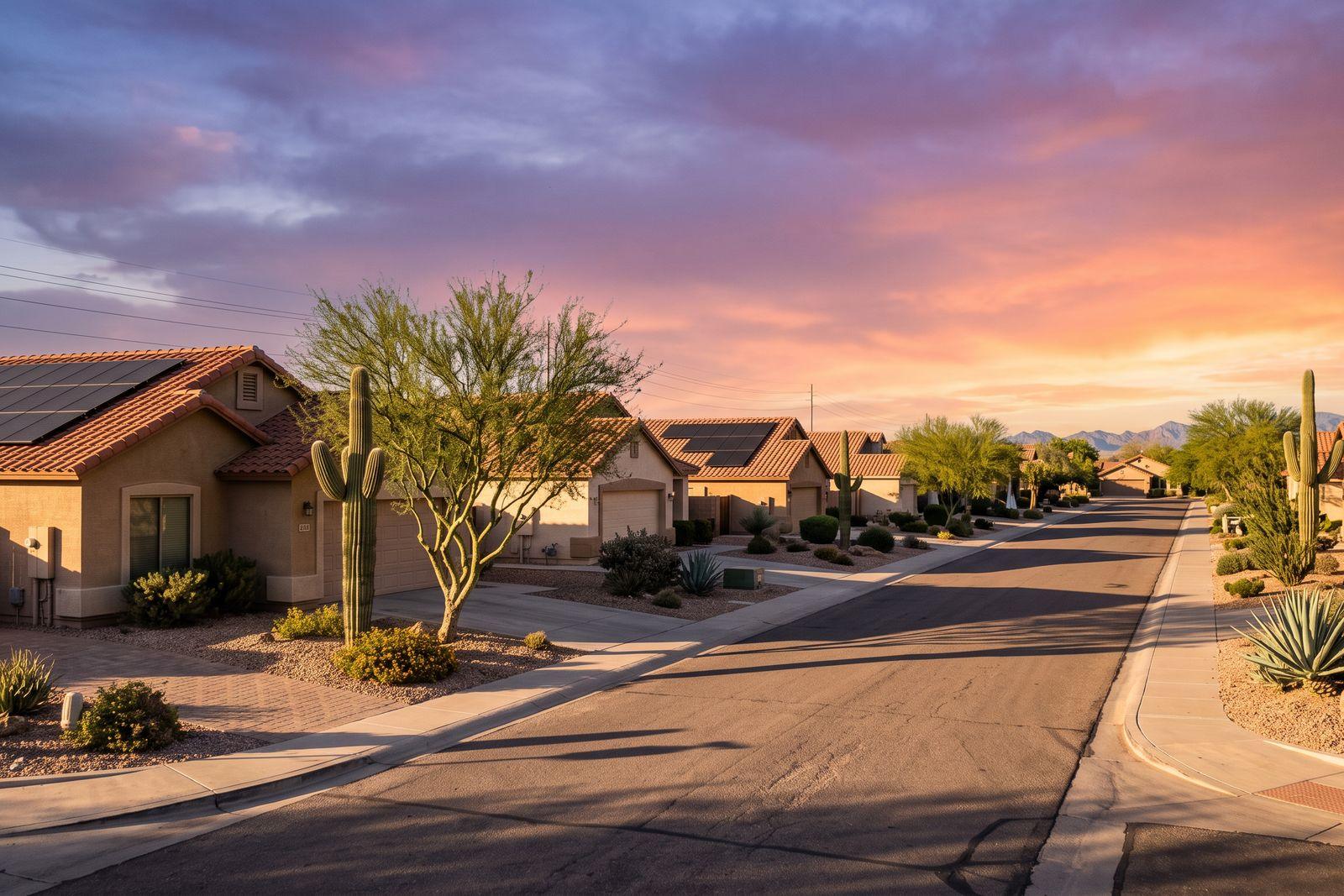
Is my Phoenix home on APS or SRP?
It can be either. Arizona Public Service and Salt River Project both serve homes inside Phoenix, and the electric bill names the one your solar application goes to.
The Phoenix city limit is not a utility boundary. Arizona Public Service and Salt River Project both serve homes inside it. City electrical submittals have to identify which one serves the address. Going solar starts the same way: read the company on the electric bill, because the interconnection and the billing plan follow that company.
What happens if my Phoenix home is on APS?
APS serves large parts of Phoenix, including much of the north and west sides. If APS is on the bill, a licensed, ROC-certified Arizona contractor submits an interconnection application to APS and pulls the City of Phoenix permit. The APS process guide says not to operate the system before permission to operate. When APS can grant it, the notice is an email and a door hanger. If it cannot, the door hanger says what is still open.
The application includes a site plan and an electrical diagram, plus permit clearance from the city before APS will finish. Energy sent to the APS grid is credited under the export rules for that application. The home remains an APS customer and still draws grid power when use exceeds production, unless a battery is discharging. Verix Energy does not set APS plan terms and does not promise what the bill will show.
A battery on an APS application is not a footnote. The packet needs the battery specification sheet, and a parallel system is marked exporting or non-exporting. That choice is part of the design. It is also the reason a Phoenix battery job leaves the city's shortcut permit path, which is described below. The shortcut and the APS letter are different documents.
What happens if my Phoenix home is on SRP?
SRP serves other Phoenix addresses, including parts of central and south Phoenix. If SRP is on the bill, the contractor files the interconnection with SRP instead of APS. The City of Phoenix permit still applies. SRP offers solar price plans for homes with on-site generation, and how exported energy is credited depends on the plan the homeowner picks. Nighttime use, and any hour the home needs more than the system is producing, still comes from SRP unless storage is covering it.
SRP's permission to operate comes after a passed final inspection. The system should not be in normal operation before that, except for testing. If the design includes a battery, SRP expects the battery to be charged at the inspection. An SRP Phoenix house does not use the APS exporting checkbox, and an APS house does not use an SRP solar price plan. The city form that says "identify APS or SRP" exists so those files do not get mixed.
Verix Energy is a solar company in Gilbert. We explain which of the two Phoenix paths matches the bill. Licensed, ROC-certified Arizona contractors install. We do not.
Can I add a battery to solar in Phoenix, and what permits does it need?
Yes, but a battery takes the project off Phoenix's shorter permit routes. Plan on the regular building permit, a Phoenix Fire Department permit, and the utility application that matches the bill.
Phoenix publishes a shorter permit route for some rooftop solar, and it publishes a list of projects that cannot use it. The city's permit-by-inspector path is for an Arizona licensed contractor, on a legal single-family or duplex roof, with no battery, no existing solar, and no ballasted or ground-mounted array. It excludes Historic Preservation districts and FEMA special flood hazard areas. It limits that shortcut to systems of 10 kW or smaller and to a dead load not over 4 pounds per square foot. Those are eligibility rules for the shortcut. They are not a citywide ban on larger systems, and they are not a Verix Energy package.
The same document says the Phoenix Fire Department requires a separate permit for photovoltaic and battery energy storage systems. SolarAPP+, which the Planning and Development Department also accepts, likewise excludes batteries, historic districts, and flood hazard areas. If you want storage, plan on the regular building permit plus the fire permit, and plan on the utility application that matches the bill. A battery is what lets selected circuits stay on in an outage. Grid-tied solar without one shuts off when the grid does. We will not promise that the whole house runs, and we will not promise a duration.
On APS, say whether the battery should be able to export. On SRP, the battery has to show up charged for inspection, and the generating facility follows an SRP solar price plan. Adding storage to panels that are already installed depends on the inverter and the electrical panel. The city's shortcut also excludes homes that already have solar, so an add-on is a regular permit either way. Licensed contractors do that work. Design and sales stay with Verix Energy. Details that are not Phoenix-specific are on the battery page.
Do historic districts, flood zones, or HOAs stop solar in Phoenix?
No, they do not forbid it. A historic district or a flood-hazard parcel means the regular permit instead of the shortcut, and a planned-community association shall not prohibit a solar energy device.
A solar company in Phoenix has to start over at every address. Roof types run from older shingle ranches to tile, and some houses sit in historic districts where the shortcut permit is unavailable. A flood-hazard parcel has the same issue. Neither fact means solar is forbidden. It means the application is the regular one, and the contractor should know that before promising a fast permit. Shade from neighboring buildings matters more on small lots than it does on an East Valley cul-de-sac. The design uses the roof you have.
If the home is in a planned community, the association shall not prohibit a solar energy device, and the state definition includes storage for on-site use. Placement rules can still exist when they do not block installation or hurt function, use, cost, or efficiency. A condo or a high-rise is a different legal document from a planned-community house, and Verix Energy is a residential sales company that starts with houses. Tell us what the building is before we talk about a roof array.
Have the electric bill when you call 480-406-3127, and say if the house is in a historic district, a flood zone, or an association. Say if you already have panels. The quote form is on our home page. Scottsdale's north and south split is a different page: Scottsdale. Our home city is Gilbert, and downtown Mesa has its own municipal utility on the Mesa page.
How does a Phoenix home get permission to operate for solar?
The utility on the bill, APS or SRP, grants permission to operate after inspection. The system stays off until then, except for testing the utility allows. Verix Energy handles design and sales. Licensed, ROC-certified Arizona contractors install. Open 7 days, 8 AM to 8 PM.
-
Start with the bill
Call or text 480-406-3127, or request a quote. A Phoenix address can land on APS or SRP. The city even requires the utility name on electrical plans.
-
Separate the permit from the utility
We explain the utility path, and whether a battery, a historic district, or existing solar takes the project off Phoenix's shortcut permit.
-
Licensed contractor installs
A licensed, ROC-certified Arizona contractor handles the build, the City of Phoenix permit, the fire permit when storage is included, and the utility application. Verix Energy does not install the equipment.
-
Permission to operate
Inspection comes first. Permission to operate comes from the utility on the bill. The system stays off until that approval, except for testing the utility allows.
Who installs solar on a Phoenix home?
Licensed, ROC-certified Arizona contractors install it. Verix Energy handles design and sales and does not install the equipment.
Verix Energy
Verix Energy (legal name Verix LLC) is a solar sales company based in Gilbert, AZ. We explain the utility on the bill and the steps before a system can run. We do not install the equipment.
Licensed contractors
Licensed, ROC-certified Arizona contractors handle installation, including the permit and the utility application. The system stays off until that utility gives permission to operate.
Where is Verix Energy based, and does it serve Phoenix?
Verix Energy is based in Gilbert, AZ, and works with Phoenix homeowners on both Arizona Public Service and Salt River Project.
Open 7 days a week, 8 AM to 8 PM. Call or text 480-406-3127. Verix Energy is not a licensed contractor.
Compare cash, loan, lease, and PPA on the solar financing page, or request a free quote.
Gilbert, AZ
Where Verix Energy is based
Solar sales
Licensed contractors do the installs
8 AM to 8 PM
Open 7 days
Service areas
Based in Gilbert, working with homeowners across the East Valley, West Valley and central Phoenix.
What else do Phoenix homeowners ask about solar?
What does a solar company in Phoenix do if it does not install?
Verix Energy handles design and sales. We explain whether the Phoenix bill is Arizona Public Service or Salt River Project, and we size a proposal around that utility and your usage. Licensed, ROC-certified Arizona contractors install, pull permits, and submit the interconnection. Verix Energy does not install the equipment. The company is based in Gilbert, AZ.
Why can two Phoenix homes be on different utilities?
The city limit is not the utility boundary. APS serves large parts of north and west Phoenix. SRP serves other addresses, including parts of central and south Phoenix. City electrical requirements tell the designer to identify the serving utility as APS or SRP. The bill is the record for a specific house. A ZIP code is not.
Will rooftop solar run during a Phoenix outage?
Not by itself. Standard grid-tied solar shuts off when the grid goes down so the system does not energize a line while it is being repaired. A battery with backup equipment can keep selected circuits on. Phoenix's shortcut rooftop permit excludes batteries, and the Fire Department requires a separate permit for photovoltaic and battery storage. Runtime depends on the battery and the loads. We will not guess it.
How does APS handle a battery that can export?
On an APS interconnection, a parallel battery is identified as exporting or non-exporting, and the application includes the battery specification sheet. APS issues permission to operate by email and a door hanger, and its guide says not to operate before that. An SRP address in Phoenix uses SRP's process instead, including a charged battery at the final inspection. The two filings are not interchangeable.
Does every Phoenix solar project use the fast permit?
No. The city's permit-by-inspector path is for smaller rooftop systems without batteries, outside historic districts and flood hazard areas, with a published size limit of 10 kW and a published roof-load limit. SolarAPP+ also excludes batteries and those same sensitive locations. Anything outside the list uses the regular permit. A licensed contractor files it. Verix Energy does not.
How do I compare solar companies in Phoenix without a sales pitch?
Ask who designs the proposal, who installs, and which utility they think you are on. If they cannot name APS or SRP from your bill, they are not ready to file. Verix Energy will name the utility from the bill and will tell you that licensed contractors install. We do not publish a count of Phoenix solar companies, and we do not treat a directory rank as the decision.
Talk with Verix about a Phoenix address.
Open 7 days, 8 AM to 8 PM. Call or text 480-406-3127.